
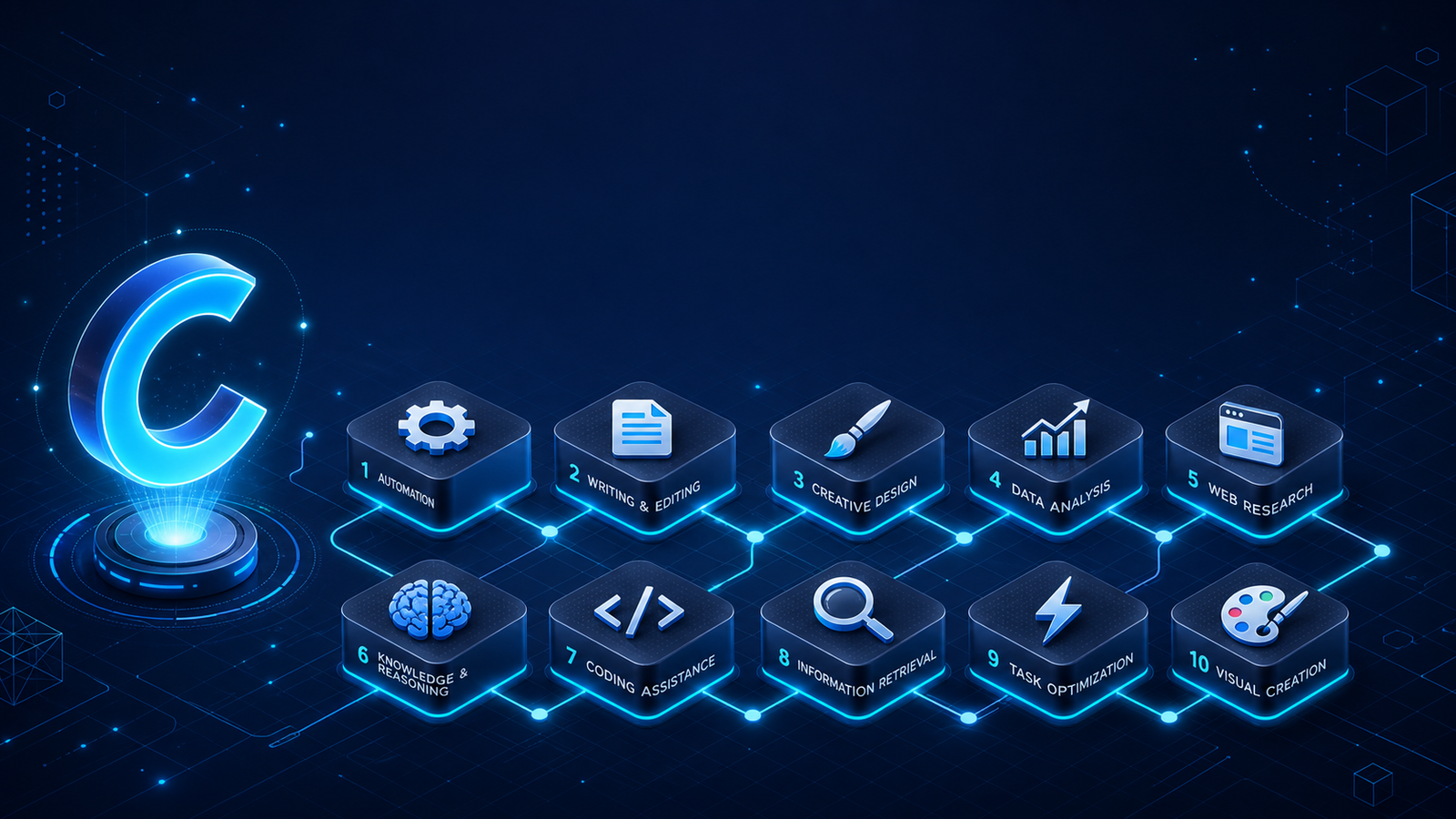
10 Best Claude Skills in 2026: The Ultimate Guide to Supercharge Your Workflow
If you’ve been using Claude for a while and keep writing the same prompts from scratch, skills are the missing piece. This guide covers the best Claude skills in 2026 — the ones that actually move the needle, not the 658 that float around GitHub unmaintained. I’ve tested, compared, and filtered the skills with the strongest functionality-to-effort ratio, based on real install counts, GitHub stars, and proven community use cases backed by Anthropic’s official ecosystem.
The ecosystem of best Claude skills has exploded: the official frontend-design skill alone has crossed 277,000 installs, and obra’s Superpowers now has more than 40,000 stars on GitHub. But more isn’t better. Installing 30 skills burns unnecessary tokens and hurts Claude’s consistency. What works is a small, sharp set of 8–10 well-chosen skills — and that’s exactly what you’ll have by the end of this article.
What are Claude skills and why do they matter?
A skill is a Markdown-based instruction package (a SKILL.md file plus optional scripts) that Claude loads on demand when it detects the task calls for it. Unlike a one-off prompt, a skill self-activates, declares the tools it uses, and maintains persistent context across invocations.
The system uses “progressive disclosure”: Claude only scans each skill’s name and description (about 100 tokens), and loads the full content (under 5k tokens) when it’s relevant. That means you can have dozens of skills installed without any performance penalty on unrelated tasks.
Three types of skills are worth knowing:
- Official Anthropic skills — published in github.com/anthropics/skills, with guaranteed maintenance.
- Verified third-party skills — community projects with real traction (40k+ stars).
- Custom skills — the ones you build yourself to automate your own repetitive workflows.
Comparison table: the best Claude skills at a glance
| Skill | Type | Best for | Installs / Stars |
|---|---|---|---|
| Frontend Design | Official | Distinctive UI design | 277,000+ installs |
| Skill Creator | Official | Build your own skills | Official Anthropic |
| Document Suite (PPTX/DOCX/XLSX/PDF) | Official | Office file generation | Official Anthropic |
| Superpowers | Community | Agentic methodology | 40,900+ stars |
| Taste Skill | Community | Advanced design | 18,400+ stars |
| Firecrawl | Community | Web scraping for AI | ~3k stars |
| Supermemory | Community | Persistent memory | 16,700+ stars |
| Webapp Testing (Playwright) | Community | Automated testing | Verified |
| Vercel Web Design Guidelines | Official (Vercel) | UI QA | Verified |
| Marketing Skills (Corey Haines) | Community | Marketing & growth | 32-skill monorepo |
Let’s get into the details. These are the 10 best Claude skills that deserve a spot in your setup.
1. Frontend Design Skill: the most-installed official skill
This is the benchmark of all the best Claude skills available today. With over 277,000 installs, it’s the most popular skill in the entire ecosystem. Before writing a single line of code, it forces Claude to commit to a specific aesthetic direction — brutalist minimal, maximalist, retro-futuristic, art deco, editorial — and then executes it with precision.
The problem it solves is brutal: without this skill, Claude defaults to what the community calls “AI slop” — Inter font, purple-on-white gradient, rounded cards, tepid animations. With the skill activated, the output looks like it was reviewed by a senior designer, not generated by an AI.
It covers typography (with distinctive display/body pairings — never Inter or Roboto), color palettes with real hierarchy, intentional animations, asymmetric spatial composition, and backgrounds with depth (gradient meshes, noise, geometric textures).
How to install: Run /plugin marketplace add anthropics/skills, then /plugin install frontend-design. Invoke it with /frontend-design followed by your description.
Official repo: github.com/anthropics/skills
2. Skill Creator: the skill that builds your own skills
Of all the best Claude skills, this is the most meta and the most underrated. Skill Creator is the official Anthropic skill that walks you through building your own custom skills interactively. It asks about the workflow you want to automate, the trigger conditions, the scripts needed, and how to handle edge cases. The output is a complete directory with proper SKILL.md structure, correct YAML frontmatter, and ready-to-use instructions.
The rule advanced users keep repeating: if you find yourself writing the same prompt across three different conversations, it’s time to turn it into a skill. Skill Creator is the shortest path to doing it right.
How to install: It ships as an official skill. /plugin install skill-creator.
3. Document Suite (DOCX, PPTX, XLSX, PDF): the Office file factory
These are four bundled official Anthropic skills that generate production-grade Office files. They handle the internal XML namespaces of the OOXML format — something that asking Claude to do “raw” usually produces broken results.
- DOCX skill: Word documents with tables of contents, headings, page numbers, letterheads.
- PPTX skill: presentations with layouts, speaker notes, transitions.
- XLSX skill: spreadsheets with formulas, formatting, and charts.
- PDF skill: creation, reading, OCR, and merging of PDFs.
If you work with clients and deliver work as Word, Excel, or PowerPoint files, this suite belongs among the first best Claude skills you install. The difference between asking Claude raw and using the skill is night and day.
Repo: github.com/anthropics/skills (each available as an individual plugin)
4. Superpowers: the most battle-tested agentic methodology
With 40,900 GitHub stars and 3,100 forks, Jesse Vincent’s (obra) Superpowers is the most battle-tested multi-agent methodology in the ecosystem. It’s not a single skill — it’s a collection that forces Claude to check for relevant skills before any task, making the entire workflow mandatory rather than optional.
Its real value is that it prevents Claude’s tendency to implement directly without planning. It forces you to generate structured PRDs, break work into atomic tasks, and apply TDD before touching code. The result: code that ships already tested and documented.
How to install: github.com/obra/superpowers — follow the repo’s instructions.
5. Taste Skill: the design equalizer for frontend
With 18,400+ stars (up 38% from March 2026), Leonxlnx’s Taste Skill is the most-starred third-party frontend design skill. It’s not a single skill: it’s a suite of 11 specialized variants plus 3 image-generation skills, with a 3-parameter system that works like an audio equalizer for design output:
- DESIGN_VARIANCE (1–10) — from clean, centered layouts (1) to asymmetric modern compositions (10).
- MOTION_INTENSITY (1–10) — from simple hover effects (1) to magnetic, scroll-triggered animations (10).
- VISUAL_DENSITY (1–10) — from luxury, airy spacing (1) to dense compact dashboards (10).
It works as a layer on top of Frontend Design. If Frontend Design is the conceptual north, Taste Skill is the fine-grained style control. It includes variants like elite-frontend-design-2026 for portfolios and premium landing pages.
6. Firecrawl: the web scraping skill for Claude
Among the best Claude skills for data work, Firecrawl stands out. If your workflows include research, competitor analysis, or content aggregation, Firecrawl turns Claude into a far more capable web agent. It adds structured data extraction, search, browser automation, and reliable handling of JavaScript-heavy sites where basic scraping fails.
It’s especially useful for use cases like: price monitoring, listing data collection, market research, and building datasets to train other models.
Official site: firecrawl.dev
7. Supermemory: the persistent memory layer
With 16,700 GitHub stars, Supermemory is the most production-proven memory layer in the ecosystem. It tracks facts about users over time, handles contradictions, auto-forgets expired info, and delivers personalized context in under 50ms.
It includes auto-maintained User Profiles, hybrid search (RAG + memory in a single query), real-time connectors from Google Drive, Gmail, Notion, OneDrive, and GitHub, plus multi-modal extractors for PDFs, images (OCR), videos (transcription), and code (AST-aware chunking).
It works as a drop-in wrapper with Vercel AI SDK, LangChain, LangGraph, OpenAI Agents SDK, Mastra, and Agno. If you’re building production agents, this is one of the best Claude skills you can install.
Site: supermemory.ai
8. Webapp Testing with Playwright
If you ship user-facing products and want to cut down on “we’ll fix it later” bugs, this skill acts as an automated QA layer. It lets Claude test your local application in a real browser using Playwright, validate user flows, catch regressions, and reduce release risk.
It’s one of the few skills you feel from day one: it saves hours of repetitive manual testing and tightens your feedback loop.
9. Vercel Web Design Guidelines: interface QA
This official Vercel skill is built for teams that want to improve UI quality without flying blind. It analyzes interface code against a broad set of UX and accessibility rules, helping you catch common problems early and keep consistency across releases.
Combined with Frontend Design and Taste Skill, it forms a complete stack: Frontend Design sets the aesthetic direction, Taste handles the fine-tuning, and Vercel Guidelines verifies the result meets accessibility and UX standards.
10. Marketing Skills by Corey Haines: the growth monorepo
This is the densest entry on the list: a monorepo with 32 skills published by Corey Haines covering CRO, technical SEO, retention loops, copywriting, viral hooks, email sequences, paid ads, and analytics. It activates specialized agents with real marketing frameworks: Copywriter, SEO Specialist, CRO, and Growth Engineer.
Feed it your current landing page and it analyzes the copy and conversion structure, improves headlines using copywriting principles like specificity and direct benefit, proposes A/B test variants, and generates SEO content for target keywords with the correct density. If you do digital marketing, this automatically lands in your top 5 best Claude skills.
How to install the best Claude skills step by step
Installing official skills is trivial. From Claude Code, run:
/plugin marketplace add anthropics/skills
/plugin install frontend-design
/plugin install skill-creator
/plugin install pptx
For third-party skills, the standard approach is to clone the repo and copy the skill folder into ~/.claude/skills/ or your project’s .claude/skills/ directory.
Once installed, Claude detects when to activate each skill automatically by reading the frontmatter description. You don’t need to invoke them manually — though you can with /skill-name if you want to force their use.
Common mistakes when using the best Claude skills (and how to avoid them)
Mistake number one: installing too many skills, assuming more is better. It’s not. Every skill consumes tokens when Claude evaluates whether to activate it, and 8 to 12 well-chosen skills cover most of the work of a professional developer or creator.
Mistake number two: not auditing your skills. Do a monthly review — delete what you don’t use, update anything with a newer version, and create custom skills for any prompts you keep repeating. To dig deeper into how Claude organizes its ecosystem, check out our complete Claude AI guide and the Claude vs ChatGPT comparison.
Mistake number three: confusing skills with MCPs. Skills are instruction files Claude reads; MCPs (Model Context Protocol) are servers that extend the tools Claude can call. They’re complementary, not interchangeable.
Frequently asked questions about the best Claude skills
Are Claude skills free?
Yes. All official Anthropic skills are free and open source. Most community skills are too, under permissive licenses like MIT or Apache 2.0. The only thing you pay for is your Claude subscription (Pro, Team, or Enterprise) or your API usage.
Do I need Claude Code to use skills?
The most powerful skills are designed for Claude Code, Anthropic’s agentic CLI. That said, you can also use skills in Claude.ai with a Pro account or higher, and via the Anthropic API. The Claude Code experience is still the most complete because it includes plugins, file system access, and the ability to run scripts.
How many skills should I install?
Between 8 and 12 of the best Claude skills cover 80–90% of what most professionals need. Installing more doesn’t improve results and can slow down activation. Start with Frontend Design, Skill Creator, and the document suite, then add specific skills as your workflows demand.
Can I build my own skills without programming knowledge?
Yes. Skill Creator (included in this list) walks you through it step by step with questions. You just need to be able to describe what you want to automate. Claude itself generates the SKILL.md file with the correct structure.
Do skills work with other AI agents like ChatGPT?
The Agent Skills standard is compatible with several agents: Claude Code, Codex CLI, ChatGPT, Cursor, and OpenCode are the main ones that support it. A well-written skill can run across multiple platforms, though some Claude Code–specific features (like plugins) don’t migrate directly.
How do I know if a community skill is trustworthy?
Three signals: GitHub star count (over 1,000 is a good benchmark), commit frequency (ideally activity within the last 30 days), and presence on curated lists like awesome-claude-skills. If a skill doesn’t show up on any curated list and has stale commits, skip it.
Final verdict: which skills should you install first?
If you could only install three of the best Claude skills, my clear recommendation would be: Frontend Design (for its immediate impact on anything visual), Skill Creator (because it lets you build the ones nobody else has built), and the Document Suite (because sooner or later you’ll need to generate a Word, Excel, or PowerPoint file).
From there, add based on your profile: if you build software, add Superpowers and Webapp Testing. If you work with web data, Firecrawl. If you build production agents, Supermemory. If you do digital marketing, Corey Haines’s monorepo. And keep the set under 12 skills to avoid performance drag.
The real productivity jump doesn’t come from accumulating skills — it comes from using 6 to 8 that match your real workflow. Audit your setup every month, delete what you don’t use, and create custom skills for any pattern that repeats. To explore other tools that pair well with Claude, take a look at our AI tools category.
Skills are the difference between using Claude as a chatbot and using it as a work infrastructure. And in 2026, that difference translates into hours saved every week.